

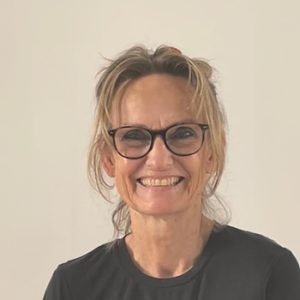
Part One
Close Encounters at the Top of the World
3rd Space: Welcome Amy. In 1983 you travelled to the remote valley of Zanskar in Ladakh, where you walked an extraordinary 500 kilometres alone. A solo journey at the age of twenty-one. What motivated you to take on such a journey?
Amy: There are multiple dimensions to what motivated me. I had travelled to India six months prior, looking for a deeper understanding of Buddhist and Hindu teachings. I was interested in how to live a life of purpose and meaning, and happiness. In India I heard about this valley that had been virtually untouched. Zanskar is the oldest valley in the world with a continuous Buddhist tradition. It’s very isolated. And although it’s hard to imagine now, there were no cell phones then, no GPS or Internet.
I felt drawn to the mountains. I also wanted to experience what life in a valley lived in accordance with the Buddhist principles was like. On one hand it was an adventure quest, but really, I was more of a spiritual seeker.
3rd Space: From reading the book you wrote about your experience it sounded like the actual trek or pilgrimage itself became a powerful practice.
Amy: Yes, it was in many ways. Pilgrimage by foot is a time-honoured practice. In India people walk long distances to sacred places. From Bhutan and Darjeeling, they’ll prostrate all the way down to Bodh Gaya in Bihar, the site of the Buddha’s awakening. It’s an act of reverence and surrender, where one is devoted to the journey itself.
Every step you’re taking is part of your quest for deeper illumination. It builds a kind of meditative rhythm. When you’re walking long distances hour after hour, you struggle with your mind in the same way you do in meditation. Some days you’re bored, some days frustrated, some days you just want to go home and wonder why you’re doing this at all. Other days you’re euphoric, you want to continue for the rest of your life. All those states and fluctuations are part of your experience.
During that time, I gained a lot of self-knowledge. I was twenty-one and trying to figure out who I was, how I got here, my cultural conditioning, my family conditioning, and what it meant to be outside of my cultural environment in a place where I could deeply reflect.
I became aware of the fluctuation of the mind and various emotional states, including the allure of bliss states. We enjoy their illuminating and nourishing nature but then grasp at them. Afterwards you feel ‘Oh, I’m not doing it anymore. I’m not having that big experience again. Why aren’t I more serious?’ etc. Sanskar valley is very remote with mountains and rivers but not much greenery. It’s monochromatic in a certain way, so this allows you to sink into your experience.

Faith in Humanity
3rd Space: You were alone, even camping out at night in the wilderness. Ladakh is probably one of the most isolated places in the world. But you did meet people along the way. And at times you stayed with Zanskari families in their homes. What was it about the people that impacted you? From the interactions you describe in your book, they had a big impact.
Amy: Yes. I feel indebted and grateful, and quite emotional because they really gave me faith in humanity. They gave me the real-life experience of people living together in harmony. They’re not special, but they live according to Buddhist precepts and have done so for generations. This creates a light-hearted, loving and fulfilling environment. That has stayed with me.
I didn’t write the book for decades. It was my Covid project. I wrote it when many around me were feeling cynical and fearful. People were suffering and dying and there was a fear of others that I actually don’t think we’ve recovered from, as a population. This reified something very unfortunate in our culture. In Zanskar I experienced an incredible open-heartedness and generosity. The women, also, were strong and vibrant, independent, fun loving. Their humour was quite bawdy at times! [laughs].
I fell in love with these colourful and light-hearted people, who were also deeply serious about the Buddha’s teachings. They left an impression that changed me as a person. Before this, I had ideals and aspirations for how humanity could live, but I didn’t know of a single place on earth where people actually lived that way.
3rd Space: Yes. Ladakh is known for its sub-zero winters lasting for months at a time. It’s almost desert-like. But what comes through in your book is a joy of life and being together despite the harshness. I found the relationship between this and Buddhism very interesting. Can you say a bit more about the role Buddhism played in Zanskari culture?
Amy: It’s a complicated question because Buddhist culture is different in different countries. I think some of the cultural qualities in Zanskar and Ladakh have to do with the hardship of life, itself. In the tropics such as Sri Lanka, Burma, and some parts of India, you see a much greater separation between men and women. They are very patriarchal cultures. So, I don’t want your readers to think that Buddhism has always been, or is, a more enlightened culture regarding equality between men and women!
But because Zanskar is so isolated, and because the men were traders, travelling by horse along frozen rivers all the way to Turkey in the winter, the women were on their own. They could have up to four husbands due to the men’s absence for months at a time.
Buddhism historically has been a patriarchal tradition, but I found the Zanskari women to be unusually self-assured. I appreciated this a lot, especially as a woman traveller on my own. Often, I was the only woman in a male society. I would either be in the women’s group, or in the men’s group. But in Zanskar everyone was together.

Radically Different Orientation
Amy: One of the principles of Buddhism that I think makes the society so harmonious, is their long-term perspective. They believe deeply in reincarnation. And whether one believes in this or not, what Zanskaris see is a continuum of life. They appreciate in a visceral way that everything we do sets something in motion. That there are reverberations to all our actions that can be for the benefit, or detriment, of ourselves and others.
It’s a scientific law that nothing exists in a vacuum, and the Zanskari people take this to heart. They understand that they’re dependent on each other because the conditions are so harsh, but their karmic continuum also matters. They’re living their lives to attain Buddhahood. Some ordain as monks or nuns, but everyone’s life is oriented to manifest clear understanding, discrimination, and compassion.
3rd Space: That’s a radically different orientation to life than here in the West. What would you say is the enduring impact of the time you spent in the Zanskar valley?
Amy: I think witnessing their devotion to a life that aspires to be an expression of spiritually awakened consciousness. That gave me encouragement on my own path. It still inspires me, even though what this means now translates differently in a Western environment. I’m not trying to live a Ladakhi or a Zanskari life. But that sense that your entire life is moved by what you care most about, and the resulting happiness, sense of continued purpose, growth and discovery, and openness, is something that has stayed with me and is very much the container of my life.

Death and Equanimity
3rd Space: There was a particular incident in your book that struck me deeply. It was the story about the horse that broke away. The outcome was so different to how something like that might play out in our societies. Could you tell us about that?
Amy: Yes, It had a profound impact on me also.
Two Zanskari horsemen passed by me one day and offered to put my backpack on one of their horses. This was very generous as horses are prized in Zanskar. As we were walking together, one of the horsemen fell behind. My companion and I stopped and waited until he eventually reappeared in the distance. However, he only had one horse with him, and he was carrying my backpack.
From the little Zankari, Tibetan, Urdu and Hindi I had, I understood that one of the horses had spooked and bolted to the edge of the cliff. The horseman tried to call him back as there was a dramatic drop below into a raging glacial river. Sadly, the horse did fall, landed on a ledge, and died immediately. The man climbed down, extricated the blankets and my backpack, and carried everything back to us.

What struck me most was how equanimous he was. He simply expressed that everything has an end, everything changes, there’s nothing to hold on to. I was feeling terrible because I assumed that the foreign smell of my belongings on the horse’s back might have caused it to panic. I tried to express my apologies and desire to do something about it, but they wouldn’t accept any of it. For deeper reasons they were able to move on without blame, without remorse, without worrying about what this was going to mean for them. Without being upset about their loss. They just accepted it…
You can’t simply apply a teaching to those kinds of moments. It has to be your orientation to life to be able to express that kind of equanimity. And this was one incident of many, where I saw how for Zanskaris, Buddhism is not a religion they follow. It’s an understanding, an orientation to life that guides their reactions.
3rd Space: That’s very powerful. You also describe in the book how before returning, the horseman took time to perform mantras and blessings for the deceased horse, to help guide and ease its transition after such a violent death.
Amy: Yes. That transition is very important in Zanskari culture. Everything matters. In our culture we’re always rushing to the next thing. We don’t really live life, and we often don’t really live death either, right? As soon as a family member dies, the focus is on sending out announcements and invitations and whatever else we need to do. It’s not on grieving, not with the spirit and consciousness of the loved one. Most cultures do have traditions around this, but many of us don’t put them into practice, even if we go through the ritual. The Zanskari people really live this.
3rd Space: The anecdotes in your book convey a culture where the orientation is holistic, caring, and long-term. It appears to take in much more than the concerns of only our individual selves.
Amy: Yes, in that way it’s very different from ours.

An Absence of Gendering
3rd Space: Something else that struck me was the lack of gendering in Zanskari culture.
You mentioned the strength and independence of the women. From your descriptions, the very polarized gender traits our societies still carry, weren’t as marked there. Can you elaborate?
Amy: Yes. The men are very gentle. ‘Maternal’ is the best way I can describe it. You often see them with babies and young children. I always felt incredibly safe with them. I think this comes from their devotion towards Tenrezi Avalokiteshvara, the deity of compassion. Reverence for care is built into the culture. They embrace the cultivation of ‘bodhichitta’, or loving kindness, which is care towards all other beings, not just human beings, but all beings. They never take life casually. They’re meat eaters because they need to be. So, there is slaughter and the taking of life. But it’s always intentional.
There’s a real sense of masculine gentleness that’s not weakness. The men are fierce. They’re strong. But they don’t have that need to express a dominance that borders on violence.
3rd Space: That explains the lack of fear you express throughout the book, regarding travelling and sleeping out alone.
Amy: Yes. At times groups of men would travel part way with me. It says a lot about their culture that I felt safe. Very different to the culture I grew up in, where I remember experiences of men whistling and jeering at me. I always felt exposed and at risk; that I needed to develop an invulnerable exterior to protect myself.
Part Two
A Civilisational Reset and Artificial Intelligence
3rd Space: I wanted to fast forward to the present. How has your time in Zanskar, and other related experiences in your life, affected your life now?
Amy: I think my life has been a continuous unfolding of my own spiritual search, and then later finding ways to live the insights I’ve had. There’s a point where you realize that you don’t need to seek anymore. You don’t need more experiences; you can relax and live what you’ve discovered. You continue to learn and evolve, develop, and go through transformation in different ways, but that sense of being a twenty-one-year-old existential seeker is resolved. [smiles]
I’ve always been sensitive to where it seems my life is supposed to go, rather than what I think I want to do. Sometimes I find myself doing projects that I might not have chosen, but which felt karmically right. So, ten years ago, I founded a nonprofit in Philadelphia to bring the insights of forty years of spiritual practice and knowledge, research and learning, to high school students. We’ve worked with 29,000 students at this point.

I was not an educator per se. But in 2014 there I was… piloting a program for students! They weren’t very interested in my adventures in India [laughs]. I quickly realized that as teenagers, they’re interested in what’s happening in their world, their lives. So, I found ways to translate those insights and practices into a secular environment – to bring a sense of context to students, of understanding, and some recognition of our evolutionary development and the influence culture has on us. I also introduced some basic meditation practices. It’s had a positive impact, and I have learned and grown a lot myself from seeing the hardship of these inner-city students’ lives.
So, the way I think my time in Zanskar relates to all this, is surrender – an acceptance of one’s path without an attempt to manipulate or judge it. You just give the best of what you have, right? Of course I want the program to be recognised. I want to grow it. I want it to be as good as it can be.
Navigating Challenge
3rd Space: Western culture is pretty much devoid of the kind of spiritual orientation you describe in the Zanskar Valley. Our orientation is short term and highly individualistic. We’re not encouraged to consider consequence. How do you navigate that challenge?
Amy: That’s a great question. Right now, I’m doing lot of research. The world of education is changing radically. I’m currently in a program with the director of virtual reality experience at Morehouse College. We’re learning how to build individual AI ‘tutors’ by embedding principles of compassion, non-violent communication, conscious dialogue and inquiry into the way these AI tutors work with youth.
You see, I’m interested in the deeper substrate of how these AI tutors are designed, so that they engage with individual students from a deeper level of consciousness.

So, in the digital education space, we are using this moment of transformation to make as much change as we can, at a significant level.
3rd Space: It sounds revolutionary.
Amy: Yes. I do think it’s possible to change our culture.
3rd Space: I can see how effective customised learning can be in teaching more conventional subjects. But you are talking about effecting the substrate of consciousness, i.e. bringing human qualities and values currently largely absent in our education system. How is that possible?
Amy: I’m not a coder myself. But I’m in a process of trying to influence the technologists who can. The Tibetan government in exile, in collaboration with the Dalai Lama, is training an AI platform on all their wisdom traditions. So, there is a model out there.

If we train AI tutors on compassion for all sentient beings, on non-attachment, on a recognition of the consequences of our actions, on the preciousness of human life, to encourage self-love and self-care, and they respond to students’ issues from this knowledge base, it could have a huge influence.
Human Versus Bot
3rd Space: There is a part of me that says, ‘Can a deep shift in perspective and values really be conveyed through AI?’ How much does this require a human being?
Amy: I think it’s important to recognize that these technological tools are already being designed. Generally, they’re shaped on an aggregate of what’s on the internet now, including racism, stereotypes about gender etc. What I’m saying is that we should train them on the best of what we’ve got.
3rd Space: I hear you. And given the scale of change that needs to happen, and the fact that most young people are learning and engaging online already, this is radical in terms of AI’s potential to affect consciousness in positive ways.
Amy: Yes, I think so. It might be possible to use this moment to do something really profound. Our young people desperately need it. I guess my idealism and sense that a better world is possible, that human nature is basically good, means that if we provide the right context and cultural structures, it’s going to bring out the best in people.
At the same time, I don’t think there’s any substitute for real human connection. The more we can aspire to meet from the best of ourselves, only good, creativity, wholeness and support can come from that. I feel like a lot of my life is committed to just finding ways to do that.
3rd Space: Thank you, Amy. We look forward to future discussions on this as you and others take this project further.
The full interview is available as a podcast.
