

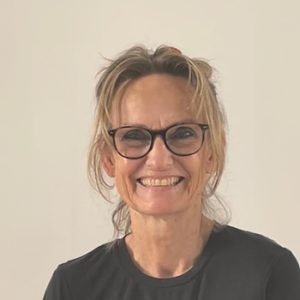
3rd Space: Welcome Robin.
You founded Yes to Life twenty years ago in response to the tragic death of your youngest daughter, Bryony. Could you tell us more about the early history of the charity?
Robin: Yes to Life was a response to the situation Bryony was in. It was a concept that emerged while Bryony was still alive, and which she was very involved in. It was basically birthed out of the lack of choice, gaps in care that we experienced then. Which I would now describe as a fundamental lack of love in the system.
Obviously in acute medical crises or emergencies, conventional medical care is what people need. But an impersonal, efficient system alone is simply not adequate when people are facing an existential crisis, and whole families are in shock.

With Bryony, we had to work with a situation where you were expected to just do what you’re told. The idea that you might look outside the box and see what else is available, was seen as absurd and dangerous. In fact, the idea that you might want to save your own life was seen as ridiculous. The system was oppressive. And in many cases abusive.
However, we were grateful for the emergency care that Bryony initially received. It probably gave her a decade of very good life that she wouldn’t have had without it. So, I’m not critical of everything, but we realised then that somebody needed to do something about the serious gaps in our medical system. So, why not us?
Lack of Love Within the System
3rd Space: What does the charity provide that’s missing in conventional medicine?
Robin: Well, a lack of love within the system means there’s almost no appreciation that one is dealing with a person, a whole person, not just an illness. Yes, there is a physical problem, but the person suffering this may also be dealing with the emotional, mental, and spiritual issues that arise when facing death. People are much more multidimensional than the healthcare system allows for, and there is no support in place for any of these other areas.
Twenty years ago, I knew there were other ways to support people going through chemotherapy, just on a physical level. But these would never be considered by the NHS, despite strong scientific evidence showing their value. Not being pharmaceutical drugs, there was no way the medical establishment were going to use them. And they still don’t.
We’re a space where people can talk without feeling they’re crazy. Talk about the fact they want to stay alive, despite being told they’re going to die. It’s a natural response to life. For many this alone is a massive relief. So, we listen, we signpost, we provide a wealth of resources in different formats, right up to supporting those in existential crisis.

We do everything we can to inform people of the choices they have, and to support them in making the choices they want to make. We’re not prescriptive. We’re not telling anybody what to do. But we are saying there’s much more out there than what is offered in your oncology unit. And we’ll do whatever we can to help you.
3rd Space: That’s an amazing service. Was the lack of choice offered Bryony due to a prohibition on other options, or were they just not known at the time?
The Power of Autonomous Choice
Robin: That’s an interesting question. Firstly, it’s different in the case of an adult versus a child. Bryony had cancer three times. The first time she was nine, and the last time she was twenty-three.
When it comes to children and life-threatening disease, the oncology team’s word is law. Literally. The treatment they prescribe is backed by the law. So, there is no choice in that.
It’s different for adults. An adult can legally decide what treatment they want to pursue. Many people who come to us are pragmatic about their treatment choices. They want to see what’s on offer and what might give them a better chance.
What we want is for people to make informed choices for themselves. That means knowing what’s on offer at the hospital, and what else is available. So, when they make a choice, they can feel this is the right thing for me.
But this is a very challenging place to get to amidst the mayhem of pressure from oncology wards, where oncologists often say, ‘Look, if you don’t do this, you’re going to die’.

There are a lot of forces at work which can sway people into making decisions they don’t really want to make. We often lack the sense of self and purpose that enables us to make autonomous choices.
When faced with something as serious as cancer, this becomes a big issue.
It’s very difficult dealing with a medical system that’s not open minded. Even when it comes to evidence-based alternatives. We’re a listening ear that gives people a chance to stop, take a breath, and think about what they want for themselves.
3rd Space: That’s an invaluable space.
Robin: Yes. We still have the ‘white coat’ syndrome here in the UK, where the 1960’s model of doctor-as-God still exists. This kind of hierarchy has disappeared from other areas of life. But it still exists in conventional medicine. And it’s powerful.
3rd Space: Do you see any changes within the system?
Robin: Yes. There is movement in the other direction.
Exercise has barely been on oncology’s radar, but now it’s sprung into awareness with some awesome evidence regarding results with cancer. Trials show that women with breast cancer can reduce their chances of having a recurrence by 50% with an exercise program! There’s no drug around that can do that.
You would think that patients in every oncology ward across the country would be told about this wonder drug which is free, totally non-toxic, and life affirming. But no, they’re not being told.
3rd Space: Why not? It seems so obvious.

The Business of Medicine
Robin: It’s a mix of things. The oncology industry, along with other aspects of medicine, is wedded to the pharmaceutical model. This model has been driving the whole ‘industry’. It’s a business. Illness makes money.
The pharmaceutical industry has long been ‘educating’ doctors. Providing them with information, via sales reps, on the ‘excellent’ results companies have achieved through their own trials of their own drugs! And if anybody has any doubt about how well that works, just look at Oxycontin.
Twenty years ago, when Bryony was alive, this drug was new on the market. She was prescribed it after an operation to remove part of her leg. The top surgeon at the Middlesex Hospital personally told me that oxycontin didn’t have withdrawal side-effects. It was the new drug!

Now, where did he get that information? From a sales rep, nowhere else.
Bryony had terrible symptoms coming off it. I didn’t know if this was due to the cancer or withdrawal effects from the drug. I searched and found hundreds of testimonies on the internet of people reporting on the effects of coming off Oxycontin.
That senior surgeon managed to stay insulated from all that evidence. He listened to the sales rep. He wouldn’t listen to his patients. That’s how it works.
Since then, that company has made $millions getting people addicted to Oxycontin, destroying lives, families, whole sections of society in America. How did they manage to do that despite the evidence being out there? It’s because doctors don’t listen to their patients. They don’t follow the science. They follow the business model.
Doctors wouldn’t like to hear this. But Oxycontin is an example you can’t argue with.
3rd Space: It’s shocking but perhaps unsurprising. Modern society prioritises profit over everything, right?
Robin: Yes. In so many areas.
Corporate Capture & Power Hierarchy
3rd Space: This raises a lot of questions. How can doctors be ‘insulated’ at this point? Cultural awareness has changed radically. Are you saying that the medical establishment is deliberately deaf to cultural influence? Or is it simply captured by the pharmaceutical industry?
Robin: I wouldn’t say it’s deliberately deaf. I think it’s been captured. The pharmaceutical industry knows the medical system is hierarchical. And it knows how to work the system; the places to pull a lever to keep medics on the marketing plan. They’ve been doing it for years. They’re very sophisticated. Having toned down practices like lavishing expenses on doctors in return for prescribing their drugs, they’re more transparent. But frankly, this practice hasn’t gone away.

The profit motive is fundamental to healthcare. And a for-profit motive is always going to lead to more people getting sicker, for longer. That’s the business model. How could it ever make people well? It just couldn’t.
3rd Space: It’s a dark picture. The nature of your work at Yes to Life must bring you up against this industry. What are the major obstacles you’ve had to face these past twenty years?
Drugs = Medicine
Robin: We do come head-to-head with the industry.
It’s very instructive to look at nutrition in healthcare. Nutrition has been in the sight lines of two of the biggest industry sectors on the planet.
It’s been at least a century, in the West, that people have looked to nutrition as a way of treating health conditions, including cancer. That’s a threat to two specific industries.
Obviously to the pharmaceutical industry because, well, ‘we don’t want food fixing people’. We have drugs. Interestingly, when the BBC discuss addressing chronic health conditions, they typically don’t use the word medicine. They use the word drug. Drugs equal medicines. They’ve managed to give them equivalence. But medicine can be food. It can be exercise.
And the food industry, itself, that doesn’t want people to think food can be medicine. They want to make ultra processed junk food that you get a hit from i.e. ‘food’ people get addicted to. It’s massively profitable. The modern food industry hasn’t been interested in promoting health, or anything like that.
Fortunately, nowadays, there is a movement of companies created specifically to make good food that promotes good health. But these are not the majority.
Nutrition Under Assault
Robin: These two powerful sectors work against nutrition, relentlessly attacking it as a means of making people well, particularly cancer. If somebody is called a ‘nutritionist’, they won’t get across the threshold of a UK hospital, even today. They’re regarded as charlatans, despite being highly qualified people who’ve generally completed a good five years of intensive study.
Nutritionists are not allowed anywhere near an oncology ward. Yet nutrition is fundamental to good health.

Medicine in Crisis
Robin: The NHS in Britain is currently in crisis. The new government knows they have got to move away from ‘firefighting’, towards health promotion and prevention. So, you can be sure the pharmaceutical industry will be thinking about great new drugs for keeping people well! It’s a bad joke. Because what we need is exercise and nutrition. We need the fundamental building blocks of good health.
3rd Space: Where are we with this?
Robin: We’ve got a long history of developing superb functional medicine outside of our healthcare system. There’s knowledge and experience in promoting health and in the prevention of disease. But this is still not reaching hospitals because the pharmaceutical industry has got it sewn up. ‘Healthcare equals drugs.’
3rd Space: And the place of drugs?
Robin: Drugs can and do save lives. We need them. But in terms of a healthy population, the current system is not working. With more drugs, there’s more chronic disease. We’re also going bankrupt trying to pay for all these very profitable drugs. So, we need another approach.
The Silver Lining of Covid
3rd Space: How is Yes to Life viewed by the medical establishment?
Robin: Twenty years ago, we were seen as dangerous lunatics. So, I’m glad to say things have changed. But it’s been unbelievably slow because of the strength of the forces against us. The pharmaceutical industry has limitless resources. And they’ll throw anything at keeping their profit margin. A tiny charity advocating good nutrition could easily be crushed. So, we’ve had to be very canny, careful to get this far.
We’ve been attacked, of course. And we’ve nearly crashed financially. But COVID was a kind of Godsend. It was a nightmare, obviously. But the silver lining was that a lot of people receiving regular cancer treatment in the oncology unit, couldn’t continue. They couldn’t attend hospitals. All resources went to COVID.
Many people, trapped in their homes with cancer, started to look outside the box. They got savvy about other options regarding cancer care and started stepping off the conveyor belt of conventional medicine.
Another COVID realisation was that many lives were lost due to chronic, debilitating conditions that were being managed with drugs. Those people’s bodies weren’t ready for a new kind of virus. They didn’t have the internal systems in place to tackle a new invader. Consequently, large numbers of people tragically died.
However, what was once regarded as a ‘hippie’ idea – the concept of wellbeing – entered mainstream.

The Importance of Belonging
Robin: Today this is called ‘Lifestyle Medicine’. A broad term that covers everything from nutrition and exercise to critically important factors driving our well-being like authentic social connection, i.e. not just Facebook.
Loneliness is a key driver of ill-health on our planet. So, if we think it’s all about drugs, or even all about nutrition, we’re missing a fundamental human need, connection and a sense of belonging.
3rd Space: Modern life seems to have amplified our isolation. Yes to Life is a cancer charity, but you seem to be pushing for a cultural shift not only applicable to cancer but to our well-being as human beings?
Robin: Yes. There’s no point in trying to address just one part of this issue. You won’t succeed. Nutrition is just one part of a big picture concerning the direction of society itself. And right now, that direction is one of profit over everything else.
Ethics are generally not a consideration of business. It’s more ‘Can we get away with it? Will it work’? And when that way of thinking has entered healthcare, we’re in trouble… and we are in trouble.
Love As the Essence of Change
Robin: The reason we are talking about a lack of love in healthcare is because this encapsulates all the things we’ve spoken about. Human beings need love.
The direction of business has nothing to do with love. But there are rare exceptions, businesses which do express love.
3rd Space: What steps is YTL taking to address this specifically?
Robin: We developed a six-point charter with the aim of addressing the culture of oncology. It sets out what loving care might look like, such as open mindedness, trust and respect. So, it’s less about what oncology does, than about how to do it right. The ‘what’ would change, if the ‘how’ changed.
The most important underlying message is that treatment needs to be delivered with empathy and care. Connection between the person delivering the care and the person receiving it.
3rd Space: That should be basic to healthcare.

Top-Down and Obsolete
Robin: Yes. I’m not critical of everybody in healthcare. There are some hugely caring people. But there are many who are not. And the reason they’re not, is because they’re in an abusive top-down system. It’s well documented that enthusiastic young doctors entering medicine with a desire to help people, often have this crushed out of them by the end of their first year. They either acquiesce to the system, or they leave. And of course, once they’re moulded to the system, they know what to say, what not to say, what to do, what not to do, how to cover their own backs. All this goes on in healthcare.
3rd Space: Who or what is determining the kind of environment these young doctors are being inducted into?
Robin: I’m sure some would disagree with me. But I do think oncology is the worst area of medicine when it comes to narrow mindedness and general lack of love. The reason for that, I conclude, is because there’s so much money in oncology. You can easily spend £100,000 on one patient. And in terms of business, that’s massive. So, the amount of pressure to induce conformity through fear and desire is great. And it works.
If you comply, you can be very successful— power, money, and respect.
The conformity amongst oncologists is huge. Nobody’s asking questions, looking at the science, listening to their patients. If a patient is doing substantially better than other patients, there’s rarely interest in why. Because, if it’s associated with an unconventional source, your colleagues will likely throw you out for being interested in ‘quack medicine’.
So, it’s fear and desire.
Burnout amongst doctors and nurses is endemic here. But the reason this system has survived so long into the 21st century is because the industries driving it want it to stay like that.
3rd Space: What you’re describing is a long way from the Hippocratic Oath.

Progress
3rd Space: Despite the David and Goliath situation you face, you’ve made significant progress, particularly in the last few years.
Robin: We’ve been part of the action for sure. And progress has been made. There are things happening today that I couldn’t have hoped for a few years ago. I co-host a podcast series with a Senior NHS oncologist. We both see things the same way.
Dr. Penny Kechagioglou is a courageous woman. Yet she’s senior enough to withstand the flack. She’s incredibly determined, so she’s giving permission to a whole generation of oncologists below her to show some interest in this. Previously, they were literally not allowed to look outside the box.
Since Dr. Kechagioglou came on board, we’re meeting more and more people within the NHS who are openly interested in subjects previously taboo.

3rd Space: That’s brilliant. Yet, there seems to be a profound need for re-education in the medical establishment. How to loosen the grip of the vested interests benefitting?
Robin: It’s a big question. It’s such a U turn to go from ‘firefighting’ with pharmaceutical drugs to health prevention and health promotion.
What’s heartening is there is a huge level of skill, knowledge, and science now. What we need is for the doors to be opened to allow these people across the threshold. The medical establishment have got to wake up to the fact that oncology is just one part of the picture. It doesn’t include the psychosocial aspect which is enormously important in whether people recover or not.
3rd Space: Margaret Mead is famous for saying that change ultimately depends on a small group of determined people. Do you feel that change? Do you see that as potentially coming down the road?
Robin: Good question. I feel very mixed about it. There’s a part of me that says, it’s never going to happen. But this doesn’t seem to have impacted my determination to make it happen. On the other hand, I feel incredibly optimistic because the things that I’m wanting for people are so fundamental to happiness and well-being.
I also feel that the power of money to hold back real progress is beyond its sell-by-date. Sometimes change works in different ways. Nothing seems to happen for a very, very, very long time. Then suddenly, the whole thing falls over and it’s gone.
And this could happen.

Ways to Support Change
3rd Space: It’s a gargantuan task. Yes to Life is taking on cultural forces detrimental to society, the planet, to life itself. How can we, the public, support what you are doing?
Robin: Our six-point charter is an important way. There’s a summary of it on our website. Plus, there’s a link to the full Charter which provides more detail and context. Another link goes to a petition to support the adoption of the charter, so that it gets taken seriously. Of course, we’d like lots of signatures on that!
Since this interview on December 20th 2024 Robin Daly was honoured with an MBE for his work with Yes to Life.

One Response
Brilliant and very important interview with Robin Daly, and information about the charity he founded. Thank you. Robin has been a hugely important part of my cancer journey and I will be ever grateful to him and his team for the work he/they are doing. It’s deeply heartening and life-affirming to see how so much good and goodness can emerge out of such tragedy. A real inspiration for living.